
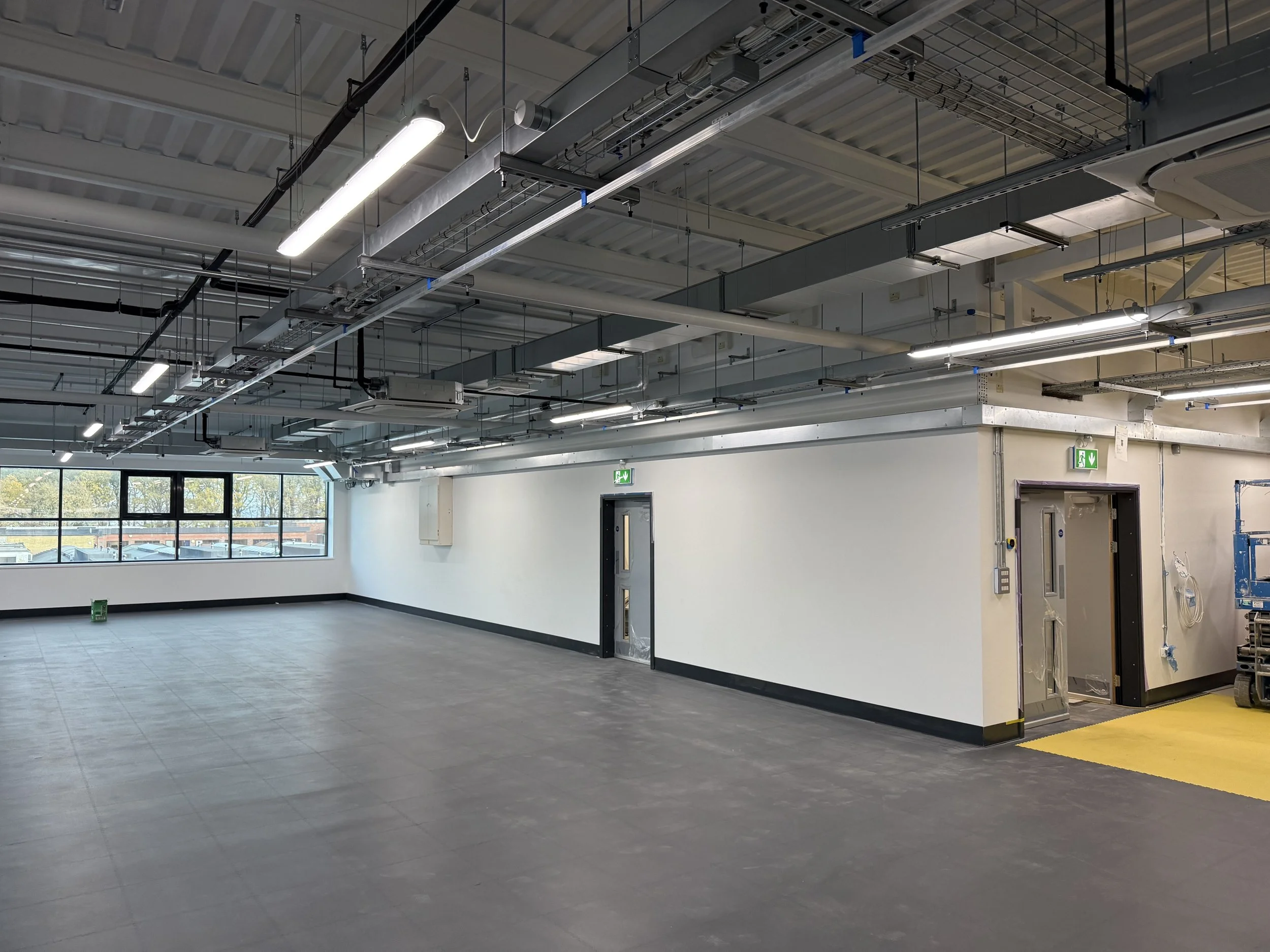
Fire Stopping
Fire Stopping
Fire stopping is a vital element of passive fire protection within buildings. It involves sealing gaps, joints, and service penetrations within fire-resisting walls and floors using appropriate fire-stopping materials, helping to limit the spread of fire, heat, and smoke.
These seals, often referred to as penetration seals and linear joint seals, address openings created by services, construction tolerances, or movement between structural elements. When installed correctly, fire stopping supports the integrity of fire-resisting elements and helps contain fire and smoke within compartments.
Because fire stopping forms part of the overall passive fire protection system, it is important that works are carried out carefully and in accordance with manufacturer guidance and supporting test evidence. Poorly installed or incomplete fire stopping can reduce the effectiveness of fire-resisting construction.
Fire stopping became more widely recognised in the late 1970s following major fires where smoke spread, rather than flame, was a primary cause of injury and loss of life. Today, it remains particularly important in buildings where evacuation may be more complex, including:
Hospitals and healthcare facilities
Care homes and assisted living environments
High-rise residential and commercial buildings
Secure or controlled-access premises
Our fire stopping services are delivered on a project-specific basis, using third-party tested fire-stopping products installed in line with manufacturer instructions and industry good practice. Clear installation records and photographic evidence are provided to support ongoing building management and maintenance.
